An end table might seem like a small addition to your living room, but choose the wrong one and it throws off the entire space. Too tall, and you're reaching up awkwardly for your cup of tea. Too small, and it looks lost beside your sofa.
Here's what makes it easy,finding the right end table is straightforward once you know what to look for. This guide covers everything you need to know, from the ideal height and size to materials, styles, and styling tips that comes handy.
Whether you are furnishing a new home or refreshing your current space, you will find practical advice to help you choose an end table that looks great and works even better.
What Is an End Table?
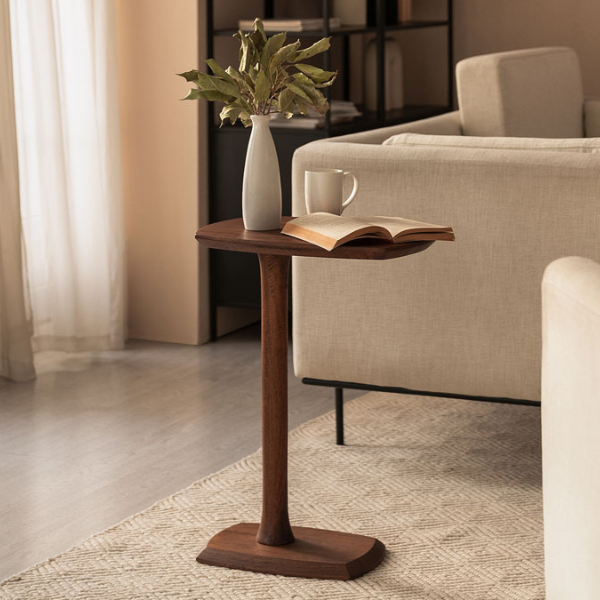
An end table is a small table placed beside a sofa, armchair, or bed. It provides a convenient surface for everyday essentials like a lamp, your morning coffee, the remote control, or a few favourite books.
While the terms end table and side table are often used interchangeably, there is a subtle difference. End tables typically sit at the end of a sofa, next to an armrest. Side tables are more versatile and can be placed anywhere, beside chairs, in hallways, or in corners.
For most UK living rooms, these terms mean the same thing. What matters is finding a table that fits your space and serves your daily needs.
Why End Table Size Matters
Choosing the right size isn't just about aesthetics, it's about comfort and functionality.
An end table at the impractical height forces you to reach up or bend down every time you grab your drink. One that is too wide can block walkways or crowd your seating area. Too narrow, and there is barely room for a lamp.
Getting the dimensions right creates visual balance and makes your living room genuinely comfortable to use.

End Table Height Guide: The Simple Rule
The suggested end table height is within 5 cm of your sofa's armrest.
This simple rule ensures you can comfortably reach items without straining. If your sofa arm sits at 55 cm, look for an end table between 50 - 60 cm tall.
Standard End Table Heights
|
Sofa Type |
Typical Arm Height |
Ideal End Table Height |
|
Low-profile modern sofa |
45–50cm |
40–55cm |
|
Standard UK sofa |
55–65cm |
50–70cm |
|
Traditional high-arm sofa |
65–75cm |
60–80cm |
How to Measure
- Measure from the floor to the top of your sofa's armrest.
- Use your armrest height as a baseline.
- Look for end tables within a similar height range.
- Shop within this range for the best fit.
Pro tip: If you can't find an exact match, go slightly lower rather than higher. A table that is a bit shorter is easier to reach than one you have to stretch up to.
End Table Width and Depth: Finding the Right Fit
Height gets all the attention, but width and depth are equally important.
Standard End Table Dimensions
|
Size Category |
Width |
Depth |
Best For |
|
Compact |
30–40cm |
30–40cm |
Small spaces, beside armchairs |
|
Standard |
40–55cm |
40–55cm |
Most UK living rooms |
|
Large |
55–65cm |
55–65cm |
Spacious rooms, storage needs |
Width Guidelines
- Match your sofa's scale: A chunky three-seater needs a more substantial end table than a slim two-seater sofa.
- Leave breathing room: Allow 5–10 cm between the table and your sofa arm to avoid a cramped look.
-
Consider walkways: Ensure at least 60 cm clearance for comfortable movement around the room.
Depth Guidelines
- End table depth should not exceed your sofa's depth.
- For most standard sofas (80–90 cm deep), an end table of 45–55 cm depth works well.
- Shallower tables (35–45 cm) suit hallways and tight corners.
Choosing the Right Shape
The shape of your end table affects both the room's flow and how much surface area you have to work with.
Round End Tables
Best for: Small spaces, homes with young children, softening angular rooms.
Round tables have no sharp corners, making them safer for families and easier to navigate in tight spaces. They create visual softness in rooms dominated by straight lines and rectangular furniture. The best part? Less surface area compared to square tables of similar dimensions.
Square End Tables
Best for: Traditional interiors, maximising surface space, creating symmetry.
Square end tables offer the most usable surface area. They work beautifully in pairs, one at each end of a sofa, creating a balanced, classic look.
Rectangular End Tables
Best for: Narrow spaces, beside long sofas, when you need extra surface area.
Rectangular tables fit well against walls or in slim spaces where a square table would protrude too far. They are practical for holding multiple items like a lamp, books, and a drink.

End Table Materials: Wood vs Metal
The material you choose affects durability, maintenance, and the overall feel of your room.
Wooden End Tables
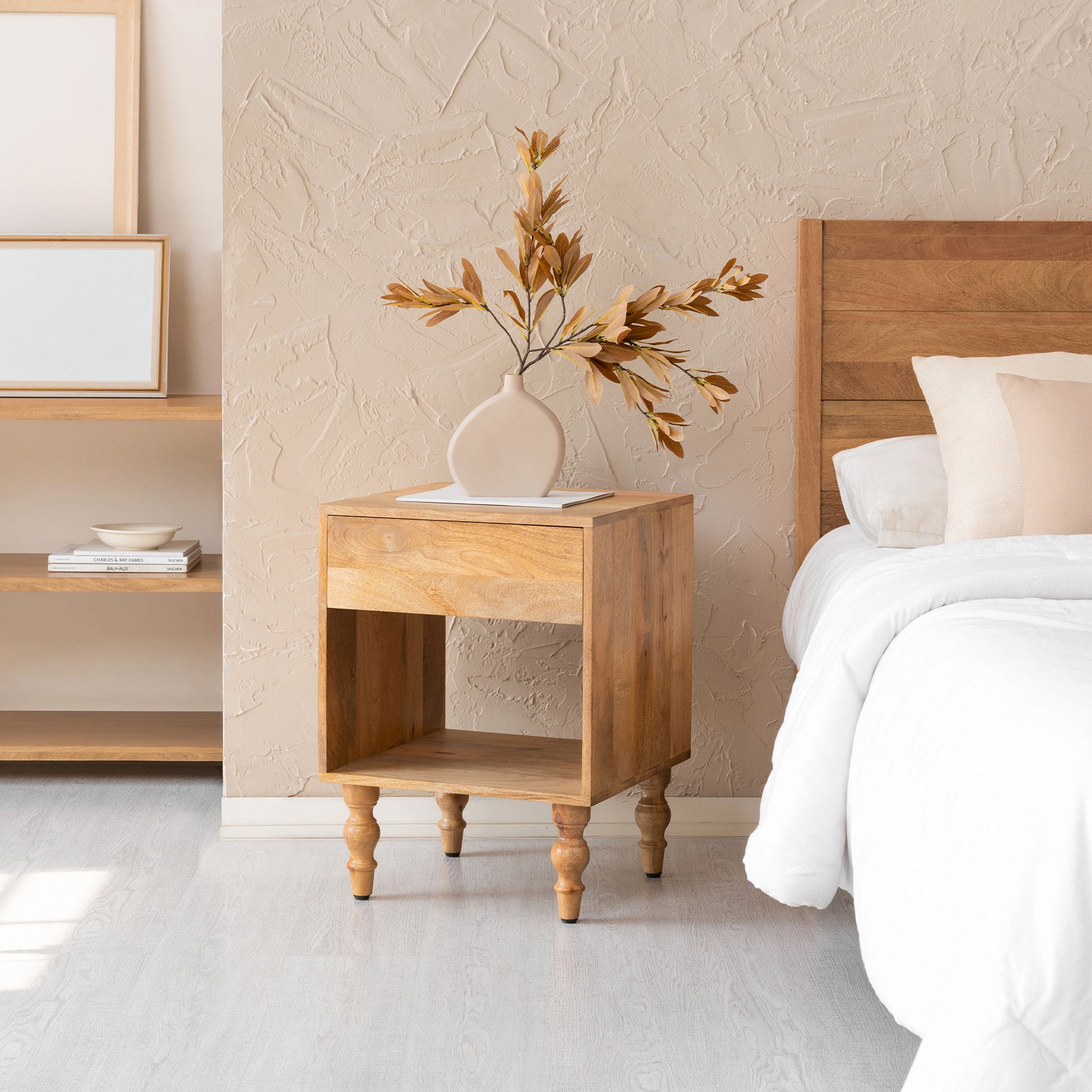
Wood brings warmth and natural character to any living room. Each piece has unique grain patterns, especially in solid hardwoods like mango wood.
Benefits of wooden end tables:
- Timeless appeal that suits both modern and traditional interiors.
- Durable and long-lasting with care and maintenance.
- Natural variations make each piece unique.
- Easy to refinish if scratched or worn.
Best Wood Types for End Tables
|
Wood Type |
Characteristics |
Durability |
|
Mango wood |
Rich tones, distinctive grains & patterns |
Very High (Janka rating: 1,070) |
|
Oak |
Classic grain, very hard-wearing |
High |
|
Pine |
Light colour, affordable, softer |
Medium |
|
Walnut |
Rich dark tones, premium look |
High |

Why Mango Wood Is an Excellent Choice
Mango wood has become increasingly popular for furniture, and for good reason. It is classified as a hardwood with strength comparable to oak and ash, yet it's more affordable.
At MH London, we use kiln-dried solid mango wood for our end tables, this process ensures exceptional strength, longevity and stability.
Care tips for wooden end tables:
- Dust regularly with a soft, dry cloth.
- Use coasters to prevent water rings.
- If required, apply furniture polish to maintain the finish.
- Keep away from direct sunlight to prevent fading.
- Wipe spills immediately.
Metal End Tables
Metal end tables suit contemporary and industrial-style homes. They offer clean lines, slim profiles, and a modern edge.
Benefits of metal end tables:
- Sleek, contemporary aesthetic.
- Extremely durable and scratch-resistant.
- Offers lasting durability and stability
- Easy to clean, just wipe down.
Common Metal Finishes
|
Finish |
Style |
Best For |
|
Matte black |
Modern, industrial |
Contemporary living rooms |
|
Gold/brass |
Glamorous, luxe |
Statement pieces, eclectic interiors |
|
Chrome/silver |
Minimalist, cool |
Modern, Scandinavian spaces |
Powder-coated metal is particularly durable. This finish creates a protective layer that resists chips, scratches, and rust - ideal for everyday use.

Wood and Metal Combinations
Many end tables combine both materials, typically a wooden top with metal legs. This hybrid approach offers the warmth of wood with the strength of metal, creating a balanced contemporary look.
These combination pieces work especially well in modern UK homes where you want natural elements without a heavy, traditional feel.
Browse our end tables collection to see examples of wood, metal, and combination designs.
End Table Styles to Suit Your Home
- Modern & Minimalist: Clean lines, simple silhouettes, geometric shapes, minimal ornamentation.
- Scandinavian: Light natural wood finishes, curved edges, practical designs, natural materials.
- Industrial: Metal frames, reclaimed wood tops, chunky proportions, visible hardware.
- Mid-Century Modern: Splayed legs, walnut finishes, clean curves, retro feel.
- Traditional: Decorative carvings, drawers or shelves, formal proportions, darker wood finishes.
Features to Consider
Beyond size and style, think about practical features that match how you'll actually use the table.
Storage Options
Some end tables include drawers, shelves, or compartments. Perfect for keeping remotes, magazines, and chargers, neatly organized and out of sight.
- Open shelves: Great for displaying books or decorative items.
- Drawers: Hide clutter and keep essentials within reach.
- Lower tiers: Additional surface space without taking up more floor area.

With or Without Drawers?
|
With Drawers |
Without Drawers |
|
Hides clutter |
Lighter visual weight |
|
More expensive |
More affordable |
|
Requires more depth |
Works in tighter spaces |
|
Better for daily essentials |
Better as decorative pieces |
Consider your lifestyle. If you have remotes, coasters, and reading glasses that need storage, a drawer is worth the investment. If you prefer a minimalist look, an open design keeps things airy.
How to Style an End Table
A well-styled end table elevates the entire room. Here's how interior designers approach it:

The Rule of Three
Group items in odd numbers, typically three. This creates visual interest without looking cluttered.
A classic combination:
- A table lamp (height and light).
- A small stack of books (mid-height).
- A decorative object or plant (low accent).
Balance Height and Scale
Vary the heights of your items. A tall lamp paired with a low vase and medium-height books creates a pleasing visual rhythm.
Keep It Functional
Your end table should work for daily life, not just look good in photos. Leave enough clear space for a cup of tea, your phone, or a glass of water.
Styling Ideas by Room
- Living room: Table lamp, coasters, a small plant, one decorative object.
- Bedroom: Bedside lamp, alarm clock, water carafe, current book.
-
Hallway: Keys dish, small mirror above, fresh flowers.
For more decor inspiration, explore our wall mounted shelves to complement your end tables with vertical storage and display.
End Tables for Different Room Sizes
Small Living Rooms
In compact spaces, every centimetre counts.
- Choose round tables to improve flow.
- Opt for tables with slim legs, they feel less bulky.
- Consider nesting tables you can tuck away when not needed.
- Stick to lighter finishes to keep the room bright.
Medium Living Rooms
Standard proportions give you more flexibility.
- A pair of matching end tables creates symmetry.
- Standard sizes (40–55 cm) work well.
- You can accommodate tables with storage.
- Mix materials if you want visual interest.
Large Living Rooms
Spacious rooms need appropriately scaled furniture.
- Don't go too small, undersized tables look lost.
- Consider substantial pieces with storage.
- Use end tables to anchor seating areas.
Pair with a coffee table from the same collection for a cohesive look.
How Much Should You Spend on an End Table?
The cost of an end table varies widely depending on the materials used, construction quality, and design details. Understanding what influences the price helps you make a more informed decision based on your priorities and budget.
What Affects Price
|
Factor |
Budget |
Mid-Range |
Premium |
|
Materials |
MDF, particleboard |
Solid pine, mixed |
Solid hardwood |
|
Durability |
2–5 years |
5–10 years |
10+ years |
Value Considerations
A quality end table is a long-term investment. Solid wood pieces can last decades with proper care, while cheaper alternatives may need replacing within a few years. When choosing, think about how long you expect the piece to last and what that means for overall value.
End Table Placement Tips
Beside the Sofa
The most common placement. Position the table at the end of your sofa, within easy reach of the armrest. Leave a 5–10cm gap between table and sofa.
Between Chairs
While styling with armchairs, place a shared end table between them. Choose a slightly wider table so both seats can access it comfortably.
In Corners
End tables can fill awkward corners that are too small for larger furniture. A round table works particularly well in corners, softening the angles.
As a Nightstand
Many end tables double as bedside tables. Check the height matches your mattress top (within 5–10 cm) for comfortable reach.
Common Mistakes to Avoid
- Ignoring Height: Always measure your sofa arm first.
- Blocking Walkways: Leave at least 60 cm clearance.
- Mismatched Scale: Match the visual weight of your table to your seating.
- Forgetting Function: Think about what you'll actually use it for.
- Overlooking Material Care: Different materials require different care.
Ready to Find Your Perfect End Table?
The right end table brings both function and style to your living room. By considering height, size, material, and how you will actually use it, you will find a piece that works beautifully for years to come.
At MH London, our end tables are crafted from kiln-dried solid mango wood and powder-coated metal, designed to last and styled to suit modern UK homes. Each piece is handmade by skilled artisans, with natural grain variations that make every table unique.


Leave a comment